
Skip to content
  • Free written quotes
  • Local crews
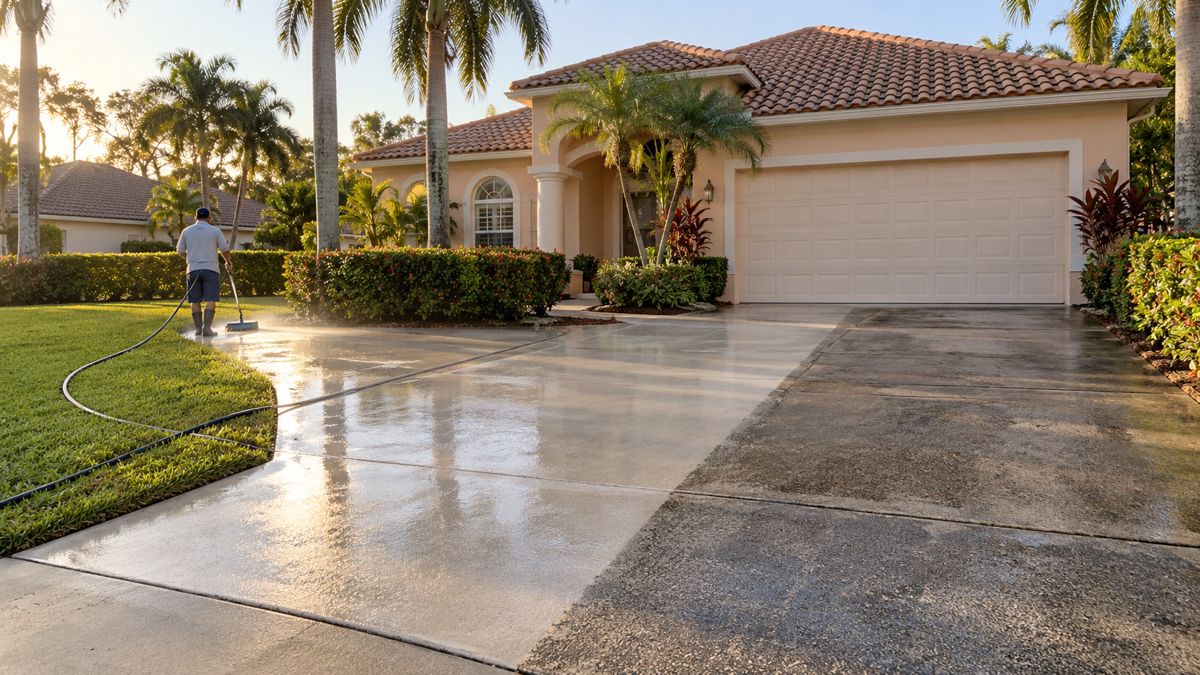
Stucco home with tile roof and a half-cleaned driveway in Coral Springs

Tree canopy and older neighborhoods

Pressure washing for Plantation, FL homes and fences

Gentle cleaning for shaded roofs, stucco walls, driveways and wood fences under mature trees. Request a quote and we will confirm availability.

  • Soft wash for stucco and roofs
  • Stronger pressure only where concrete can take it
  • Written quote before work starts

Mature trees, deep shade and what they leave behind

Plantation is one of the older and leafier parts of Broward County, with established neighborhoods, big shade trees and many homes from the middle of the last century. Canopy cover is a gift on a hot afternoon, but it also keeps surfaces wet. Roofs under oaks stay damp after rain, driveways under mango and ficus trees collect fruit and sap, and walls on the north side seldom get sun.

That mix produces black algae streaks, green mildew and brown tannin stains from leaves. Each reacts differently to cleaning, and some respond to patient soft washing far better than to force.

Plantation Acres, big yards and wood fences

Parts of Plantation have larger lots, some of them with open yards, barns, wood rail fences or gates. Plantation Acres, in particular, is known for a more rural feel than the rest of the city. Wooden fences and outdoor structures turn gray and green in this climate, and horse or garden areas add dust and mud to hard surfaces.

Away from those lots, the busy roads such as Broward Boulevard, University Drive and Pine Island Road carry traffic grime onto nearby plazas and walls. Residential streets behind them are quieter, and yet driveways and entries still pick up leaves and grit that ground in over seasons.

What we can clean in Plantation

Five services are available, and each links to a page with more detail.

Because older neighborhoods often need roof, walls and fence done together, a single visit can save a second trip.

Wood needs a different approach from concrete. High pressure can splinter softwood and leave fuzzy marks, so cleaning wood often uses lower pressure and a cleaner that lifts algae and gray surface fibers. A brightener may follow, and sealing helps keep the wood from graying again.

  • Wood species and age. Soft or weathered boards need gentler handling.
  • Tannin stains. These brown marks come from leaves and need a specific cleaner.
  • Finish. Old stain or paint can lift if hit hard.
  • Shade level. Deeper shade means more regrowth between cleanings.

Hardwood fences may need more drying time before sealing.

Trees, plants and water on the day

Mature gardens are part of what makes Plantation attractive, so protecting them matters. Before washing, we wet down plants nearby and take care with cleaners near shrubs and trees. Anything fragile, such as orchids or potted plants, is easier to move out of the way.

Helpful steps before a visit:

  • Trim branches that overhang the roof so they do not drag across it.
  • Move vehicles and garden furniture.
  • Mark sprinkler heads and any exposed wiring.
  • Tell us about pets and fenced animals.

Runoff should stay out of storm drains and canals, so we plan where it goes. Keep gates unlocked.

Getting a Plantation quote

We serve Plantation from Coral Springs, and the request is how we confirm we can reach your street on your date. Call (954) 555-0174 or send the form.

  1. Describe the property and the surfaces you want washed.
  2. Send photos of the worst areas, such as roof streaks or fence stains.
  3. Mention any trees, gates or animals on the property.
  4. We review everything and visit if more detail is needed.
  5. You receive a written quote and decide in your own time.

If a big tree overhangs the roof, mention it. Falling branches and leaf litter can change how we set ladders and hoses, and we would rather plan for them than discover them.

Get a quote in Plantation

Tell us what you need and we call you back.

No obligation.

Step 1 of 3

What needs cleaning?

Questions about Plantation

What is the brown staining on my driveway under the trees?

It is usually tannin from leaves and fruit. Rain brings the color out and it soaks into concrete. A tannin-specific cleaner works better than plain water, and trimming back branches or sweeping regularly helps stop it from returning. Sealing may reduce absorption on new concrete. Plain water rarely lifts it, so a purpose-made cleaner and a bit of patience produce a cleaner result than extra pressure does.

Is it safe to pressure wash a wood fence?

It can be, if the pressure is low and the method suits the wood. Hard blasting damages grain and leaves fuzzy surfaces. We use gentler techniques and cleaners made for wood, then discuss sealing or staining to keep the result lasting longer. Afterward, a sealer or stain designed for outdoor wood slows regrowth, though it needs to be reapplied from time to time depending on sun and shade.

Can shaded roofs be cleaned without removing granules?

Generally yes, with a soft wash that relies on cleaner and low pressure, not force. Shingle roofs are more delicate than tile, so we avoid scrubbing. We inspect the condition first and explain if a roof looks too worn for any cleaning. Roofs with thick moss or lichen sometimes need two passes, and we explain that in the quote so you are not surprised on the day.

How do you protect my garden?

We rinse plants before and after, use cleaners that suit the situation, and keep runoff controlled. Moving potted plants out of the way helps. Tell us about delicate or valuable plants so we can plan around them and avoid unnecessary exposure. Rinsing with plain water, covering fragile plants with plastic where possible, and giving us a list of sensitive beds are all useful. We also keep cleaner use modest near roots.

Do older Plantation homes need special care?

Often. Older paint, stucco and sealant can be fragile, so we favor soft washing and test a small area first. If a wall shows cracks or peeling, we explain the risk and suggest repairs before cleaning, so water does not get behind the surface. Thin paint, soft mortar and old caulk are signs we look for, and a gentle approach almost always works better than an aggressive one.